
Croome Court
17th September 2025
An addition to the original programme, this visit was the kind idea of Michelle Fullard, General Manager, South Worcestershire NT, to thank the Centre for its support. Michelle and Katherine Alker, who heads the gardening team, were generous in their time and information on a walk round the park, taking in the White Bridges which await restoration in 2026. We had an equally warm welcome in the house, where Michelle’s colleague explained the “Playful Experiences” project that our donation will support, and we saw the Robert Adam bookcases that have returned from the V&A.
Francis Engleheart
National Memorial Arboretum & Catton Hall
4th September 2025
After the long, hot summer, we were faced with a deluge for our final outing of 2025. But intrepid members of Wyre Forest NT were not going to let the capricious British weather spoil the day. During the morning, there was an opportunity to visit the various memorials at the Arboretum, to discover recent additions, or to ride, undercover, in the land train. Despite the rain, the special atmosphere of this moving, yet uplifting place, still shone through.
The sun came out for our afternoon visit to Catton Hall, where we received a warm welcome from co-owner, Katie Neilson, who gave us a comprehensive and fascinating history of the family and estate. The present house, designed by the celebrated architect James Gibbs was built in 1745, but there has been a settlement at Catton for over 1000 years. In the downstairs rooms, family portraits came alive through Katie’s descriptions of the characters and their often colourful lives. There are also royal portraits including Charles I, Charles II, James II and Prince Rupert, as well as Dutch and Italian paintings. Most of the fine furniture is original to the house.
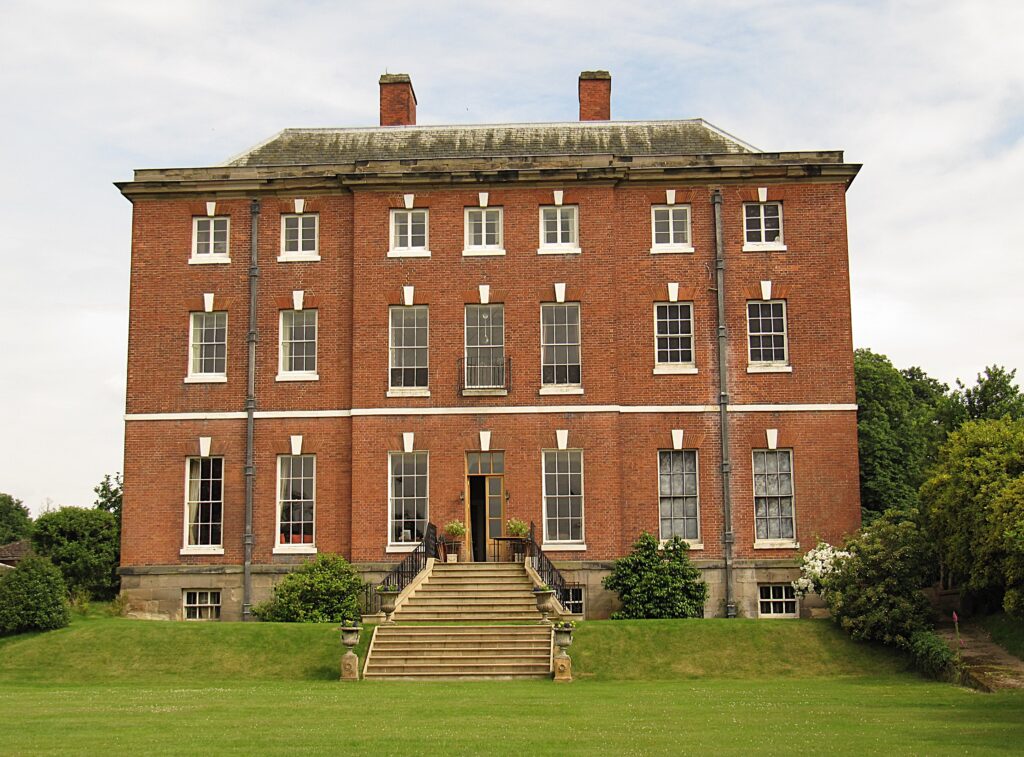
We were then allowed to visit some of the upstairs rooms on our own! After tea and cakes, served at the long, family dining table, we visited the1892 chapel, which contains a Norman font, once rescued from the nearby River Trent, carved oak reredos and a small Charles Kempe window which shows his golden wheatsheaf signature in the bottom left corner.
Katie and Robin Neilson are proud of Catton and keen to pass on their inheritance, which is evident in their enthusiasm to share their stories with visitors who appreciate the effort and dedication in preserving art and architecture.
Hatfield House
7th August 2025
The challenges of the M25 were successfully negotiated by our coach driver on this day trip to Hatfield House, just 21 miles north of London. It is an imposing Jacobean palace, built between 1607 and 1612, and id the home of the Marquess of Salisbury (The Cecil family).
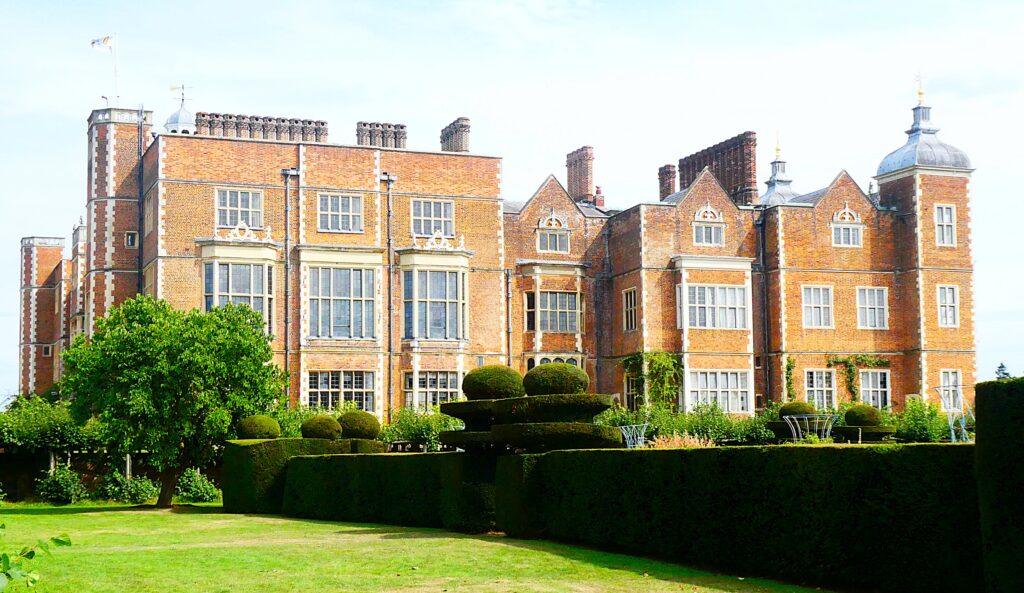
Hatfield House is steeped in political history, and has a strong association with Elizabeth 1, as she spent much of her childhood at the nearby Old Palace. Hatfield House is a popular destination for visitors, and it was busy on the day of our excursion there.
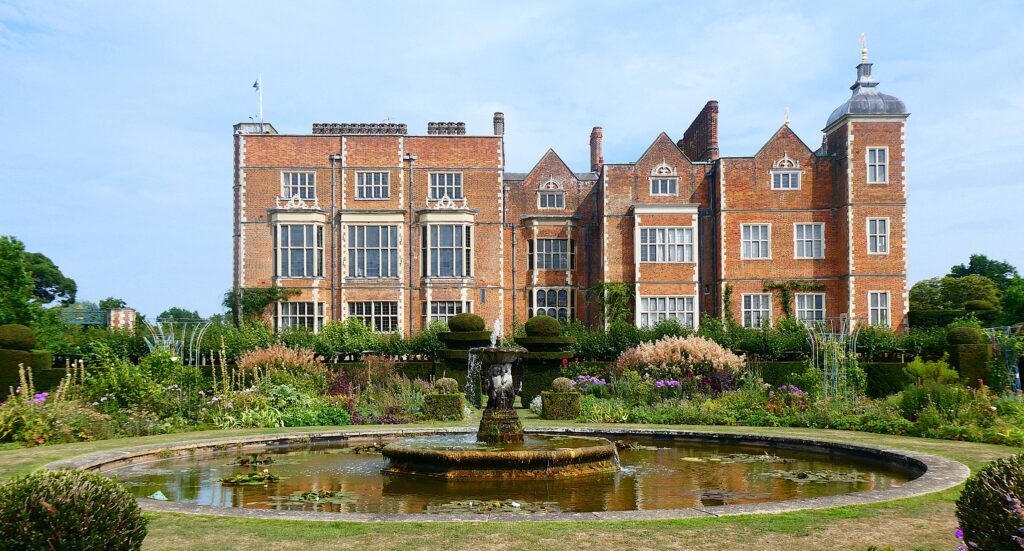
The room stewards were friendly and knowledgeable and were please to draw our attention to the treasures within the house. It was also a pleasure to explore the colourful gardens at this well-maintained property, an outstanding example of the great mansions of Jacobean England.
Shipton Hall
10th June 2025
Shipton Hall, in Gareth Williams’s words “in many ways the beau ideal of the Shropshire manor house”, is an Elizabethan stone building in the Corvedale. Built by the Lutwyche family and boasting such features as the notable porch tower and stepped windows in the gables, it was extensively remodelled in the eighteenth century by T. F. Pritchard, and the interiors present a delightful contrast to the largely Tudor exterior. Our party of 49 was shown round the house by the owner, Ben Bishop, and a particularly good tea rounded off a rewarding visit.
Michael & Rosie Evers
Kedleston Hall
20th May 2025
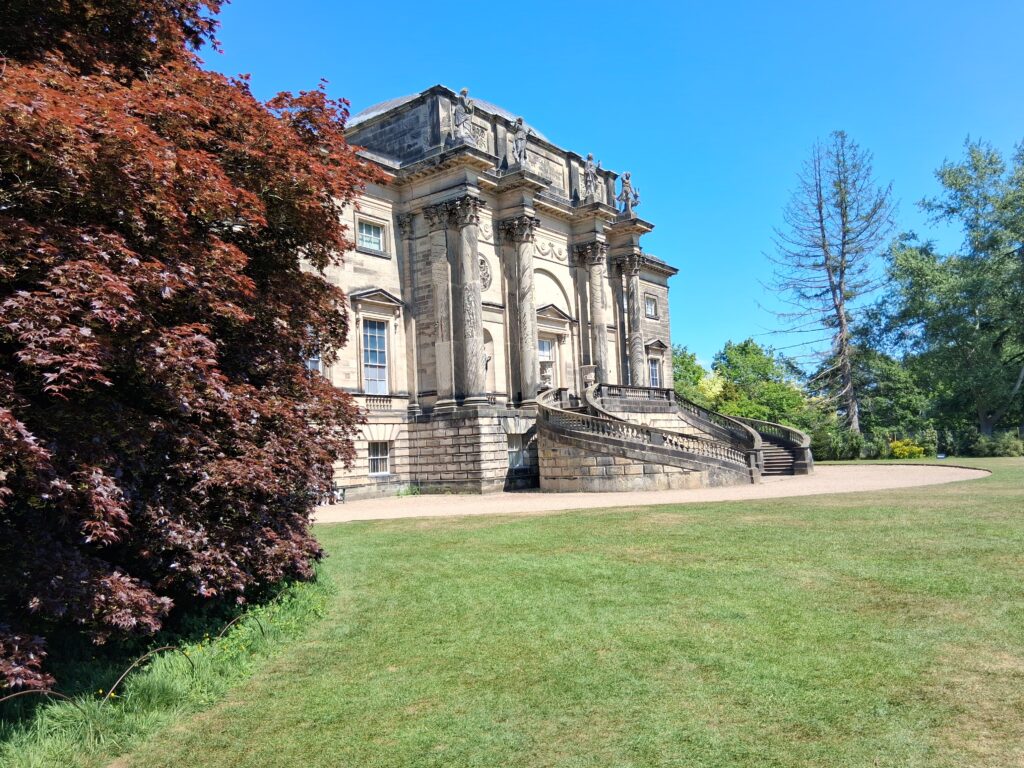
On Tuesday 20th. May 28 of us boarded the coach to visit Kedleston Hall in Derbyshire, a few minor hiccups because of the coach size we had to go round to the back entrance which we managed to miss on the first attempt and had to retrace our steps.
When we arrived, the sun had come out and it was dry all day. We were briefed by a member of staff on the Hall and when the house opened, also what to see in the gardens and parkland. I know members did go into the park to view the bridge designed by Robert Adam. The House was free flow so we could wander round at leisure, with room guides there to answer questions. It has been the family home of the Curzons for many years and decorated by Robert Adam in the 1760’s. In the museum part there are many Indian and Asian artefacts bought back by Lord Curzon when he was Viceroy.
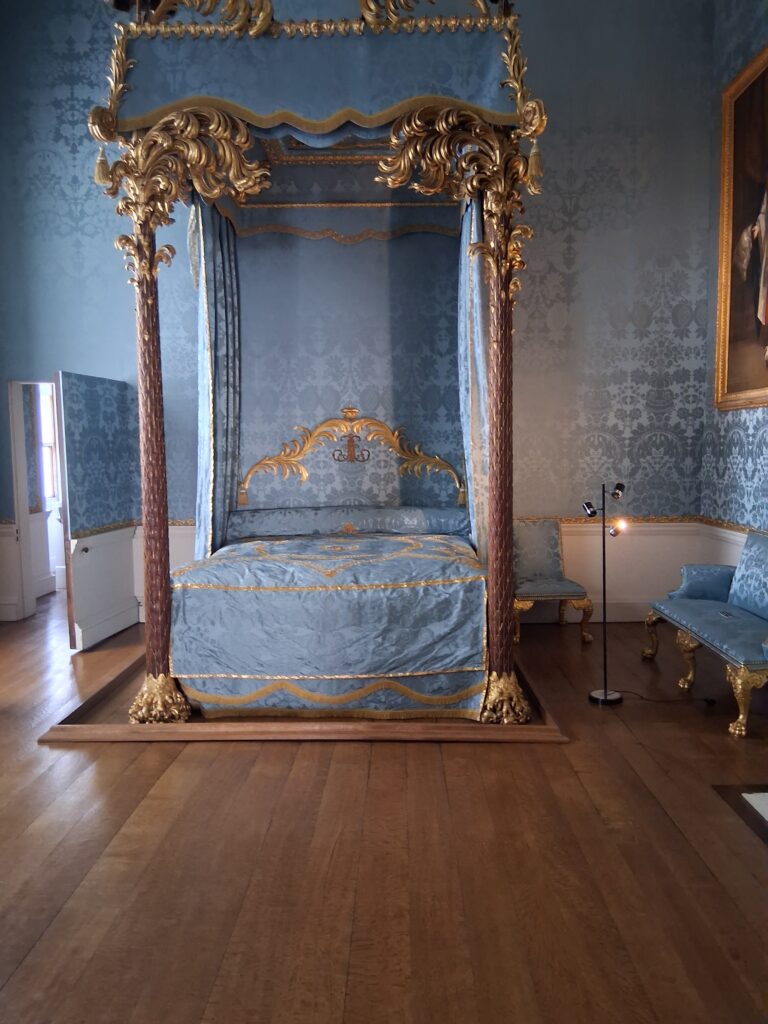
We were also able to visit the Church in the grounds where many of the Curzon family are buried. It was quite a warm day and many of us took advantage of a seat in the gardens to sit for a while enjoy an ice cream. There was a very good restaurant where we could have lunch or tea and cake, and the secondhand book shop which many of us visited. We left at about 4pm to make our homeward journey. A very enjoyable and interesting day.
Vic. Powell
Kelmarsh Hall and Gardens
22nd July 2025
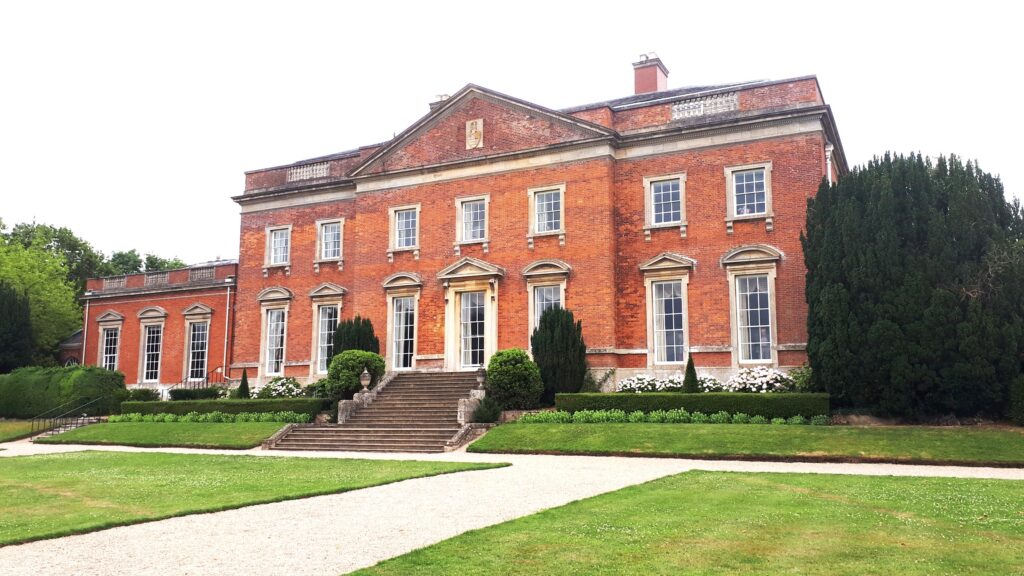
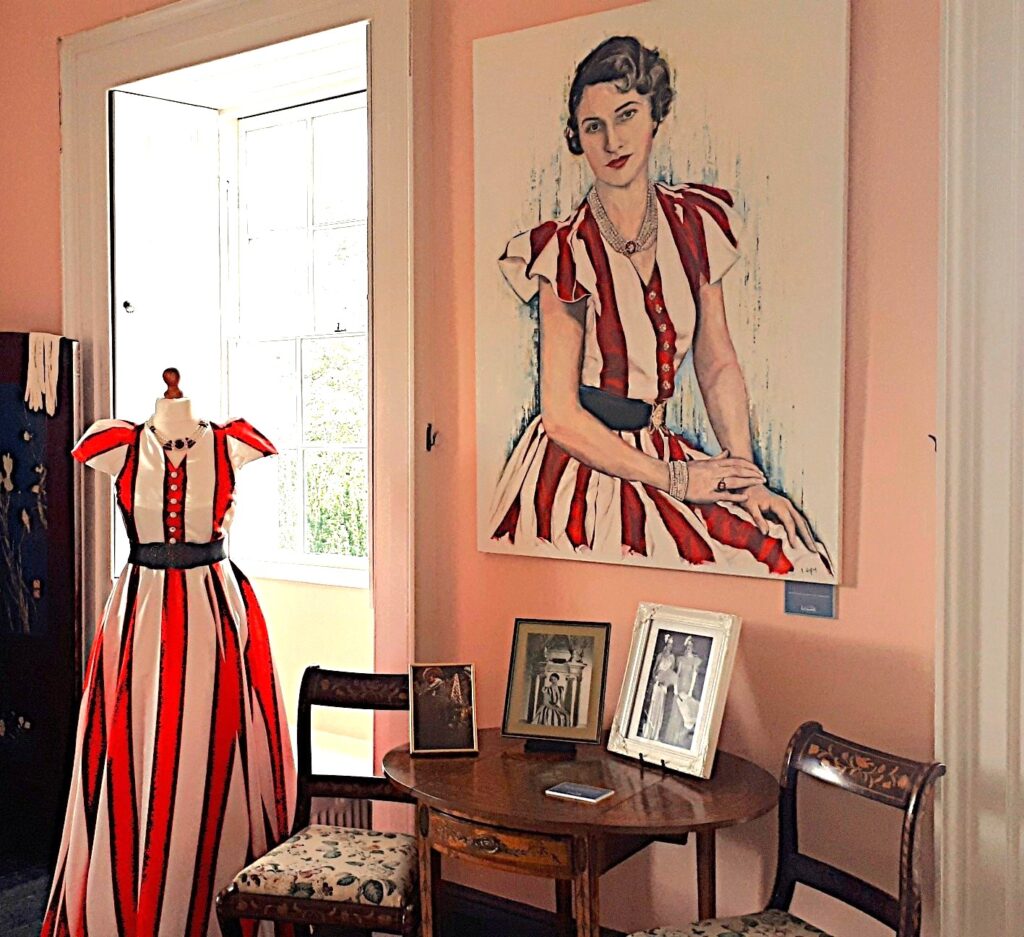
Kelmarsh Hall in Northamptonshire is an 18th century grade 1 listed country house designed by James Gibbs in the Palladian style and completed in 1732 for Sir John Hanbury a wool merchant from Beanhall, Worcestershire. In 1778 William Hanbury commissioned James Wyatt to redesign the saloon and dining room in the Adam style. The walled kitchen garden was built in 1790 and the fishing lake redesigned in the fashionable Serpentine style by William Emes a landscape gardener. In 1902 George Granville Lancaster bought the estate. The grade 2 listed gardens were largely influenced by Nancy Tree (pictured) who rented the estate and created the English Country house garden style that became so popular. She subsequently married Claude Lancaster in 1948 and had a lasting influence on the pastel colour schemes and shabby chic furniture. A new exhibition ‘The Story of Kelmarsh’ features a timeline from its first mention in the Doomsday book to the start of the Kelmarsh Trust in 1977.