
Arbury Hall – 20th September 2022

On Tuesday, 20 September, we were at last able to make our journey to Arbury Hall, an Elizabethan Mansion near Nuneaton, Warwickshire, the earlier date cancelled due to the forecasted extremely hot day. Arbury Hall, built on the remains of a Priory founded by Henry II, came into the hands of the Newdegate family (formerly of Middlesex) after they swapped houses with a lawyer who was promoted to London and found the commute rather too much. In 1742, after doing the Grand Tour, Sir Roger Newdigate (different spelling, different branch), decided that it should be updated in the Gothic Revival style. The exterior is little changed; inside there are odd remnants of the Tudor mansion but the principal rooms are filled with wonderful, often vaulted, ceilings. Unlike those of Sir Horace Walpole’s house at Strawberry Hill these feel light and airy, even joyful. Arbury is still the principal family home of the Newdegates (back to original spelling!) and they made us very welcome with tea (each of us having our own pot) and lovely cakes. As usual Sheelah provided us with a lovely day out and we thank her organising this and coping with forced changes.
Katey Fletcher
Frogmore House & the Savill Garden – 25th August 2022
Frogmore House is only open to the public for group visits for a few days in August each year. It is located within Windsor Home Park, about a mile from Windsor Castle. It is today used by the Royal Family for private entertaining. Frogmore House was purchased by Queen Charlotte in 1792 for use as a royal retreat. The queen and her daughters’ passion for art and botany are reflected throughout the interior of the house. Queen Victoria’s mother, the duchess of Kent, lived there for 20 years. Frogmore House dates from about 1680. An extensive restoration programme was undertaken in the 1980s. It was first opened to the public in 1990. The duchess of Kent, and Queen Victoria and Prince Albert, are buried in two mausoleums in the grounds. Frogmore House is an elegant property, a brilliant white building by a shimmering lake, a place of charm and serenity – despite the ever-present sound of aircraft above, using Heathrow Airport!
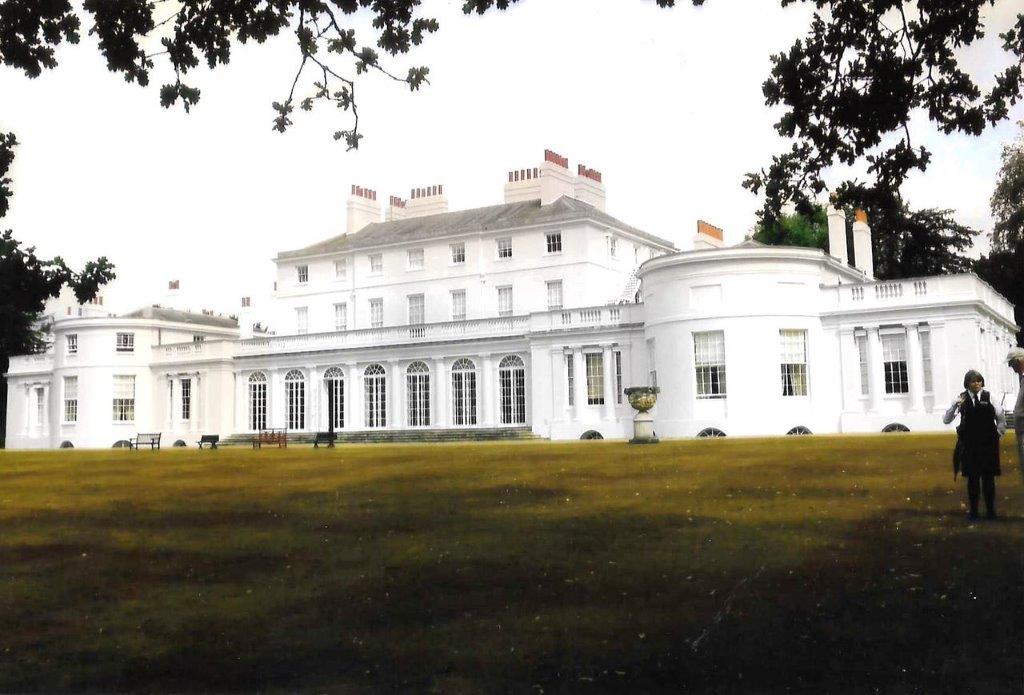
After our guided tours of Frogmore House and its grounds, we boarded the coach for a short trip to the nearby Savill Garden. In 1932 Queen Mary gave Sir Eric Savill permission to develop a 35-acre garden, which is now a haven of several designed gardens and woodland. It is one of the finest woodland gardens – and the biggest – in the country, with a vast collection of plants.
This was an enjoyable and successful outing, despite the unsettled weather, which was well supported by members. Access to Frogmore House was via the Shaw Farm Gate, near the Long Walk, which both featured in the funeral of HM Queen Elizabeth held not long after our visit.
Chris Fonteyn
Adlington Hall – 2nd August 2022
Sadly, our visit to Biddulph Grange began in the rain, but gradually the weather did improve and we were able to view the various aspects of the garden. After enjoying a meal break, we proceeded to our next destination in Macclesfield.

Adlington Hall has been owned by the Legh family for 700 years and it is a fine example of architecture over the whole of that time. We were met by a member of the family and then divided into manageable sized groups before being given guided tours of the house. Following time spent exploring the garden we indulged in an excellent cream tea.

Denise Carson
Broughton Castle – 16th June 2022
The 2022 Summer programme of outings continued in June with a visit to Broughton Castle near Banbury. The 16th was a glorious, sunny day and we arrived at the castle just in time for coffee and cookie in the Tearoom. This was a private visit and we were given a very interesting guided tour in 2 groups.
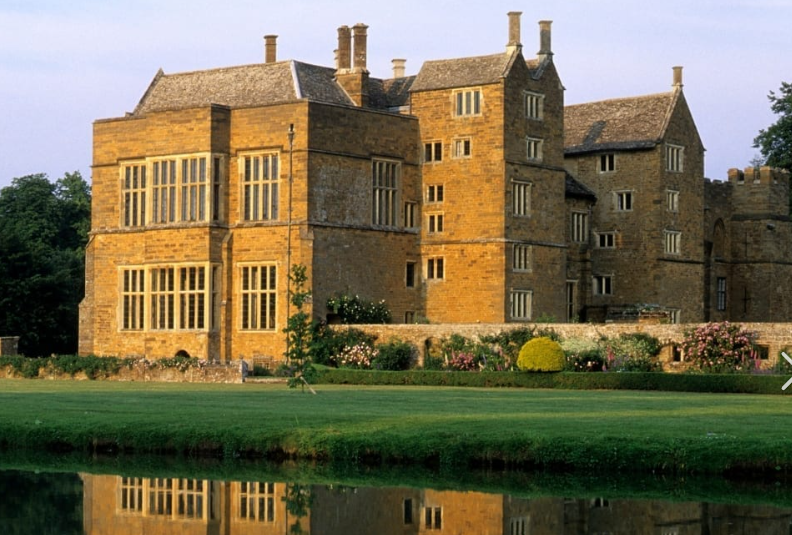
Broughton Castle is a medieval fortified manor house, the home of the Fiennes family (pronounced “Fines”), Barons Saye and Sele. The castle sits on an artificial island surrounded by a moat. Across the small bridge lies the parish church of St Mary, which is the final resting place of the family’s ancestors which we were able to visit in the afternoon.
The castle is very impressive, being built of the local limestone so common in the Cotswolds. It was built as a manor house originally in 1300 by Sir John de Broughton and was crenellated in 1406. It was transformed into a manor house in Tudor style in the 16th century. In the 17th century it became a centre of Parliamentary sympathisers and was besieged by Prince Rupert during the Civil war. Some canon balls have been found in the moat and are now on display in the Council Chamber at the top of the tower. Lord Saye and Sele was later pardoned by King Charles 11 after the Restoration, because he had not signed the death warrant of Charles 1! The guides made the history come alive and we had a very thorough and informative tour. After a period of neglect the house was eventually rescued by the 16th Baron and many later improvements and extensions were made to the house while still retaining its medieval Great Hall and Undercroft.
Lots of rooms were open for us to see including the King’s Chamber the Great Parlour, the Chapel, the Oak Room and Library as well as several bedrooms, all furnished in the style of the period. The carved fireplaces were very impressive along with several ornate plastered ceilings. At the end of the tour we made our way to the Tearoom where we enjoyed a delicious Ploughman’s lunch prepared by the ever helpful kitchen staff who made us really welcome. In the afternoon we spent time in the lovely gardens. The roses especially were magnificent and looked at their best in the sunshine. The present garden was laid out by Lady Algeron Gordon-Lennox who hosted Edward V11 at the castle. Just in case we were still feeling peckish, we returned to have tea and home-made cake in the Tearoom!
Such is the variety of architectural styles here, that the Castle has been used for filming on many occasions, most recently being Shakespeare in Love and Wolf Hall. The Fiennes family is well known – Sir Ranulph is an explorer, brothers Ralph and Joseph are actors while daughter Susannah is a portrait painter who has painted Prince Charles.
Everyone really enjoyed the visit which was very interesting and yet relaxing – a good day was had by all.
Janet Cholmondeley
Abercamlais Outing – 17th May 2022
Our first coach outing for about 2 years set off on Tuesday 17th May, not quite a full coach and we had 46 members eager to get back visiting properties and enjoying the company.
A coffee stop was arranged at the OK Diner in Leominster before we made the journey down to the Brecon area.
Lunch had been arranged at the Peterstone Court Hotel, Llanhamlach, a few miles out of Brecon.
Everyone was pleased with their meals and the excellent facilities at the hotel. I am sure some of our members will be returning for a weekend or few days stay in the area after seeing what the hotel has to offer.
After our lunch it was back on the coach for the short 15-minute journey to Abercamlais House, where we were met by the owners, Andrea and Anthony Balance, and their daughter. They then explained in detail about the history of the house that had belonged to the Williams family since about1560, and how Mrs Balance had been left it by her father. The group was then divided into two smaller parties so one would see part of the house that is open, whilst the others went into the garden. The garden is very much a work in progress especially in the walled garden, which is still under restoration, having been neglected for a number of years.
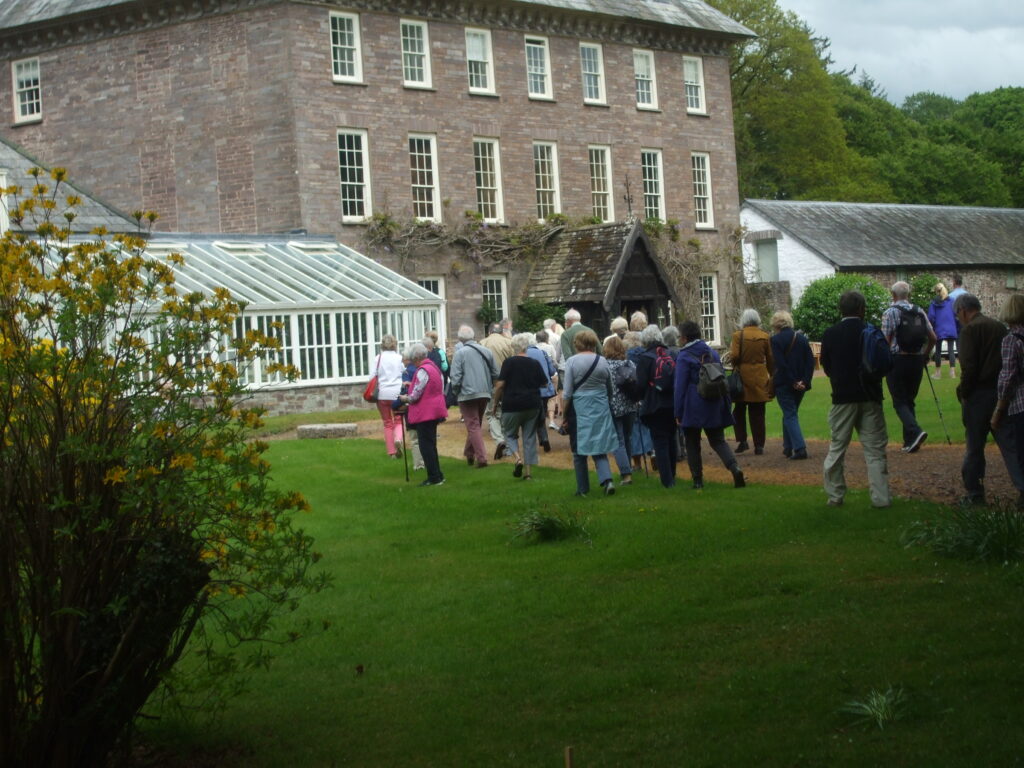
There were also a few trees down, as a result of bad storms over the winter.
The house has many different additions over the years building wise, the last from Victorian times. You enter the house into the Hall which is panelled in dark panelling with some family portraits of the Williams family, many of them were Clergymen. In the house they had a few souvenirs on sale, and artwork by a local artist who was also there to talk to us.

After we had viewed the house we had Tea and Cake, then the heavens opened and the rain came down as we said our goodbyes to the family. We then made our way back along the drive to the coach.
Then we made the home-ward journey back to Worcestershire, a thoroughly enjoyable and interesting day.
Pitchford Hall Outing – 20th April 2022
In 1992, a new young member of the Centre committee, I planned my first outing, to Pitchford Hall, celebrated as Shropshire’s finest timber-framed country house. All was well until I had a letter from Caroline Colthurst saying that the visit was no longer possible. Her regret, even anguish, was evident in her writing and not long after came the sale of house and contents that made national news. Through some deft planning we were able to switch to nearby Plaish Hall on a golden late September afternoon, still one of my happiest Centre memories.

Well, just thirty years late, we made it to Pitchford. The Colthurst family have bought the house back and are embarked on a programme of restoration to make it accessible for events as well as a family home. Welcomed by three guides as friendly and informative as you could wish, we were given the “restoration tour”, which showed us the fine historic interiors but also allowed us to roam a range on the north side, a warren of floors, staircases and rooms currently unused but full of potential. In the grounds, we made the short walk to the pitch well, still oozing thick bitumen, that gives the village its name. With ample time to study the remarkable exterior, we climbed the slope to the historic tree house before sitting down to a generous, unhurried tea in the beautifully restored orangery.
To know more about Pitchford, please read Eric Greenwood’s article that follows this report.
If you google Pitchford Hall you will also find various videos and one, from the Historic Houses Association, less than five minutes long, features an engaging conversation with the owners, Rowena (Colthurst) and James Nason, and gives you just an idea of the challenge of putting this house back into good condition after being unloved for a quarter of a century.
Francis Engleheart
Pitchford Hall – notes by Eric Greenwood
Shropshire is a county full of fine timber-framed late medieval houses in towns such as Shrewsbury, Bridgnorth and Much Wenlock. It is however in the small hamlet of Pitchford that you will find the most splendid piece of black and white building in the county. The present house is approached from the north by a winding and descending gravelled drive which passes the church and then suddenly sweeps round to reveal the vast extent of the north range – one of the most impressive timber-framed facades anywhere in England, with its great length of almost 200 feet.
In the small church of St Michael is an unusually monumental effigy of a knight – seven feet long and cross-legged, carved in oak. This marks the tomb of John de Pitchford who died in 1285 and built the original house in the late thirteenth century. The place takes its name from the pitch well by the Row Brook flowing past the hall and old ford to the east of the bridge by the pitch well. The natural bitumen from this well was used, until quite recently, for waterproofing and protecting the exposed timbers of the house.
The manor passed out of the hands of this family in 1431 and was acquired in 1473 by the Ottley family and was not sold again until 1992 when the then owners Oliver and Caroline Colthurst had to sell the house and all its contents because of losses incurred on Lloyds insurance syndicates. The house was unoccupied for many years, but was bought back by their daughter Rowena and her husband and is now being fully restored as a family home.
The present house was begun soon after 1549 when John Sandford, a local carpenter, is recorded as having obtained the lease of a tenement in Pitchford “during the building of a mansion place”. He died in 1566. The original entrance front, facing south, is now the garden side of the house. This consists of two unusually long side wings, which project forward some 70 feet on either side of a central porch and enclose a square forecourt. It is now thought that the west wing was built around part of the earlier thirteenth-century house.
On the high ground to the south of the house stands a vast and ancient lime tree whose great branches support an enchanting square timber-framed summer house. It is thought to have been built in the early seventeenth century. The interior, which is delightfully decorated in the Gothick style with very pretty plasterwork, is a later insertion of the eighteenth century.
Concert at Symphony Hall – 27th February 2022
The Centre’s last coach outing, before the onset of coronavirus and lockdown, was to Symphony Hall in January 2020. So it seemed appropriate that the first coach outing, post-pandemic, was also to Symphony Hall. This time the concert was performed by the CBSO Youth Orchestra. It was good to see a familiar face once again – Terry, our coach driver.
The trip to Birmingham took place on a glorious sunny day – springlike. The programme consisted of music by Erich Korngold (1897–1957), Florence Price (1887–1953), and Tchaikovsky (1840–1893). The concert was dedicated to the people of Ukraine. Korngold composed his Overture to a Drama at the age of 14. He was an Austrian by birth who moved to Hollywood where he composed a number of film scores. Price grew up in Arkansas, and her romantic piano concerto was first performed in Chicago in June 1934. The performance we experienced in Birmingham was only the third time it had been publicly performed in the UK. Tchaikovsky’s Fifth Symphony was warmth, passion, joy and glorious melodies. It received its première in St Petersburg in November 1888.
The CBSO Youth Orchestra dates from 2004, although its roots go back to 1956. It is made up of young musicians aged between 13 and 21. They receive practical support from the musicians of the CBSO, the “parent” orchestra. The standard is amazing, and it was a pleasure to share their enjoyment of music-making. It was an uplifting experience – they played with confidence and enthusiasm, comparable with a professional orchestra – to share their company was a perfect way to spend a Sunday afternoon!
Chris Fonteyn