
Oakly Park, 24 April

Our visit to Oakly Park in April took place on the day a mini-heatwave ended. We went into lunch at the Hopton Crown under a sultry sun, and emerged to steady rain, which continued through our time at Lord Plymouth’s house at Bromfield. Lord Plymouth talked himself hoarse as he guided us round the house, an eighteenth-century mansion remodelled circa 1820 by C R Cockerell. Oakly was not originally the Windsor-Clives’ principal seat: they owned huge mansions at Hewell, near Redditch, now a prison, and St Fagan’s, Cardiff, now the site of a museum of buildings. While very large, Oakly is in the first rank for its architecture, decoration and collection. Beyond a modest entrance hall lies the house’s coup de theatre, the staircase hall, its cantilevered stair climbing round three sides to the first-floor landing, the whole space lit by a “lantern”, i.e. a domed skylight, and on one wall Benjamin West’s huge painting of Clive of India receiving the grant of the Diwani from Shah Alam. The other interiors, though not so spectacular, are of equal quality, and house a collection of paintings ranging from renaissance works to Claude Lorrain to Sir John Lavery, whose depiction of an Edwardian gathering on Oakly’s terrace perfectly evokes the closing years of that leisured heyday. An unexpected final flourish was a chance to see Lord Plymouth’s collection of watercolours by Peter de Wint (1784–1849). Francis Engleheart
Iscoyd Park, 7 May

We last visited Iscoyd Park in June 2005. It is situated in tranquil countryside two miles west of Whitchurch, just in Wales in the detached part of the old county of Flintshire. Iscoyd Park has been the seat of the Godsal family since the 1840s. Its setting is enhanced by the cricket field in front of the house.
The original house was built in 1737 with a new formal block built at right angles to the original building in 1743. The front portico and dining room were added in 1843. There is a surviving Venetian window at the back of the house. A wide rear staircase links the earlier and later parts of the house, and leads to Iscoyd’s outstanding feature, the impressive library. Stables and farm buildings, including a dovecote, are at the rear of the house. Iscoyd Park was used as a hospital and prisoner-of-war camp in World War II.
Iscoyd Park has undergone much restoration, and operates on a commercial basis, primarily as a weddings venue, but remains a much loved family property. The standards are high, and it is immaculately presented. We were shown around the house and gardens by Philip Godsal and his son Phil. We were made welcome, and enjoyed the hospitality. Clearly, Iscoyd Park provides a source of employment for the local community. After a relaxing time exploring Iscoyd Park, as the swallows settled in, we headed for home, making a short stop at Attingham Park on the way. Chris Fonteyn
Hampton Court, 6 June
The weather was very kind to us as we set out for our first stop at Burford House and Gardens. We were able to partake of coffee there, enjoy a little retail therapy if required and visit the lovely gardens hidden away behind the house. Quite a little gem in fact!
Sadly, due to family bereavements in Scotland, Eric and I had to cut short our visit to Hampton Court Gardens. However, we did have sufficient time to quickly look around the gardens which had certainly expanded since the previous outing we ran there several years ago. We were also able to partake of the delicious lunch before we departed for northern parts. I was told by members that the castle itself was very interesting and an enjoyable time was had by all. Denise Carson
Calke Abbey and Thrumpton Hall, 17 June
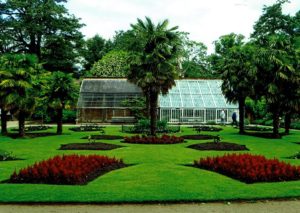
On 17th June we visited Calke Abbey and then on to Thrumpton Hall. Calke Abbey always comes up trumps with interesting house and fascinating stories of its owners, its staff and how it related to events over the years. All capped off with the extensive walled garden with its intriguing buildings still containing the old tools and equipment, as though the estate’s gardeners had just had a day off for a big occasion.
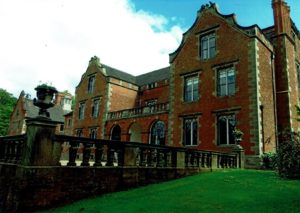
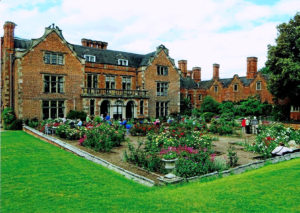
We then moved on to Thrumpton Hall in south Nottinghamshire – one of those lovely places still lived in by the owner, the odd wedding keeping its body and soul together. (Big business those, no wonder they can prove such expensive occasions.) Miranda Seymour was our host, and she was very welcoming and open in her relationship to the house and with her late father for whom the place had been his dream house since childhood when he spent much of his time there with the 10th Lord Byron who had married his aunt. It would seem father was a snob of the highest order, determined at all times that his name, George Fitzroy Seymour always be in full due to the supposed cliché of Royal connections, albeit from a Charles 11 affair. The house was delightful, the teasing chance to find out that there are the equivalent of Mrs Bucket/Bouquet in all the social ranks was fascinating and the icing on the cake was lovely tea and cakes which the fine weather enabled us to take in the beautiful garden. What’s not to like? Katey Fletcher
Painswick Rococo Garden and Brockworth Court, 9 July
On 9th July we had a lovely day out. Firstly, the Rococo Gardens in Painswick, originally created in 1740s when Rococo flamboyance was all the rage and were designed to intrigue, delight and entertain. Although the building structures survive the original design was lost in the C19 when the area was converted to growing fruit and vegetables but, from a 1748 painting by Thomas Robins, it has been possible to recapture the original layout and planting. This is gradually being re-established with the result that the gardens are again entertaining visitors. The modern art installations (with prices from £725 to £45,000) complement the garden’s ethos. Great fun and a nice café.

In the afternoon, after negotiating horrendous road works, we visited Brockworth Court, a C12 mediaeval manor house, granted to Llanthony Secunda Priory and subsequently the prior’s residence. Pre the dissolution, Henry VIII and his second wife visited. Although much altered over the years the house still retains a wealth of interesting details such as the unusual way of supporting the jetting upper floor to several priest holes from the religious upheavals following the Reformation. Another fascinating garden – again designed to intrigue, delight and entertain but more as a place to explore and wonder than a fashion statement. The day ended with a very welcome tea with homemade cakes in the Tithe Barn, wonderfully restored following a devastating fire in the late 1990s. Katey Fletcher
Beckford Silk Mill and Chastleton, 24 July
We made an early start on a beautiful , sunny day, making our first stop at Beckford Silk Mill, a fascinating country workshop for the printing and dying of silk. This included a most interesting exploratory,guided tour.
We then went on to the Pheasant pub, where a delicious meal awaited us. After a leisurely lunch break we continued the journey to Chastleton, a Jacobean Country House, for our afternoon visit.

Our members thoroughly enjoyed their free flow tour of this minimally repaired property, enriched with many fine paintings, tapestries, and wall hangings. We were also able to relax in the grounds of the adjacent 12th century Church , with a welcome cup of tea and a home made cake, before we began the homeward journey. An excellent day was enjoyed by all! Marjorie Fernihoug
Dyrham Park, 6 August
August 6th, the day of the outing to Dyrham Park, was somewhat showery but thankfully dry at strategic times such as for our en-route break at Gloucester services on the M5 and when we arrived at our destination.
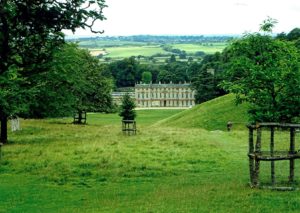
Later the afternoon was generally dry enabling us to enjoy the gardens and visit the adjacent church. Much work is being carried out within the house, but far from detracting from the pleasure of the tour, the special information displays about the work added to the understanding of the house. Everywhere the room stewards were keen to tell visitors about the areas in which they were based, including interesting details that would otherwise be missed. Eric Carson
Kentchurch Court and Berrington Hall, 20 August
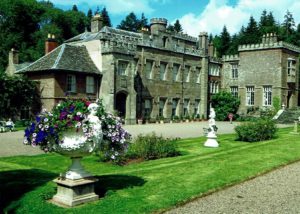
About fifty members journeyed on our outing to Kentchurch Court in Herefordshire. We had very good weather. Arriving at the court we were welcomed by the owner’s daughter. The owner, Mrs J Lucas Scudamore, was looking after the catering that day. We then proceeded into the saloon, where we were served coffee, after which we split into two parties to be taken round the house. The house spans many time periods, from the fourteenth-century tower to work done by John Nash in 1795. The house contains lots of family portraits going back to the 1500s and other items collected over the generations. After the tour lunch was served in the dining room, with its fine carvings around the fireplace. At one time they were thought to be by Grinling Gibbons, but we were told that in the past year an authority on the subject has said they are most likely to be by a local craftsman. After lunch we had time to admire the gardens and deer park. The whole estate covers 5000 acres as it sits in the valley below Garway Hill. Then it was time to board the coach and make our way to Berrington Hall for a brief stop so those that wished could get tea and see some of the garden or house as time permitted. Berrington was built in 1778 –81 by architect Henry Holland, with the parkland laid out by Capability Brown. The we departed back to Worcestershire – a very enjoyable day and we had good weather throughout the day.Vic Powell
Blenheim Palace, 4 September
The final outing of the summer was to Blenheim Palace on 4 September. It was built as a gift to John Churchill, first Duke of Marlborough from Queen Anne in thanks for his victory at the battle of Blenheim in 1704. As such it was firstly a monument to the queen’s glory and therefore it had to be a building of size and magnificence.
The approach to the interior from the Great Court is truly theatrical with a large flight of steps leading through the Giant Portico into the Great Hall. This is the most majestic and breathtaking room in the house, with giant columns reaching upward to the ceiling, painted in 1716 by Sir James Thornhill, nearly seventy feet above.
From here there is a sequence of state rooms, each furnished with sumptuous tapestries, paintings, and furniture. The final state room is the Long Library running the length of the west wing for 180 feet. The extraordinarily fine stucco decoration of the ceiling runs from the statue of the grateful queen at one end to the Willis organ installed in 1891 at the other.
Despite the grandeur of these rooms perhaps the most appealing is the smaller Indian Room overlooking the water terraces and the formal gardens. The hand-painted wallpaper, commissioned by the fifth duke in 1826, was created by the French painter Bernard Dufour. There are nineteen complete panels depicting a hunting scene in India. It is rare to find a complete set still in situ, and we were delighted to be able to partake of our buffet lunch in such a charming and delightful setting. Eric Greenwood